
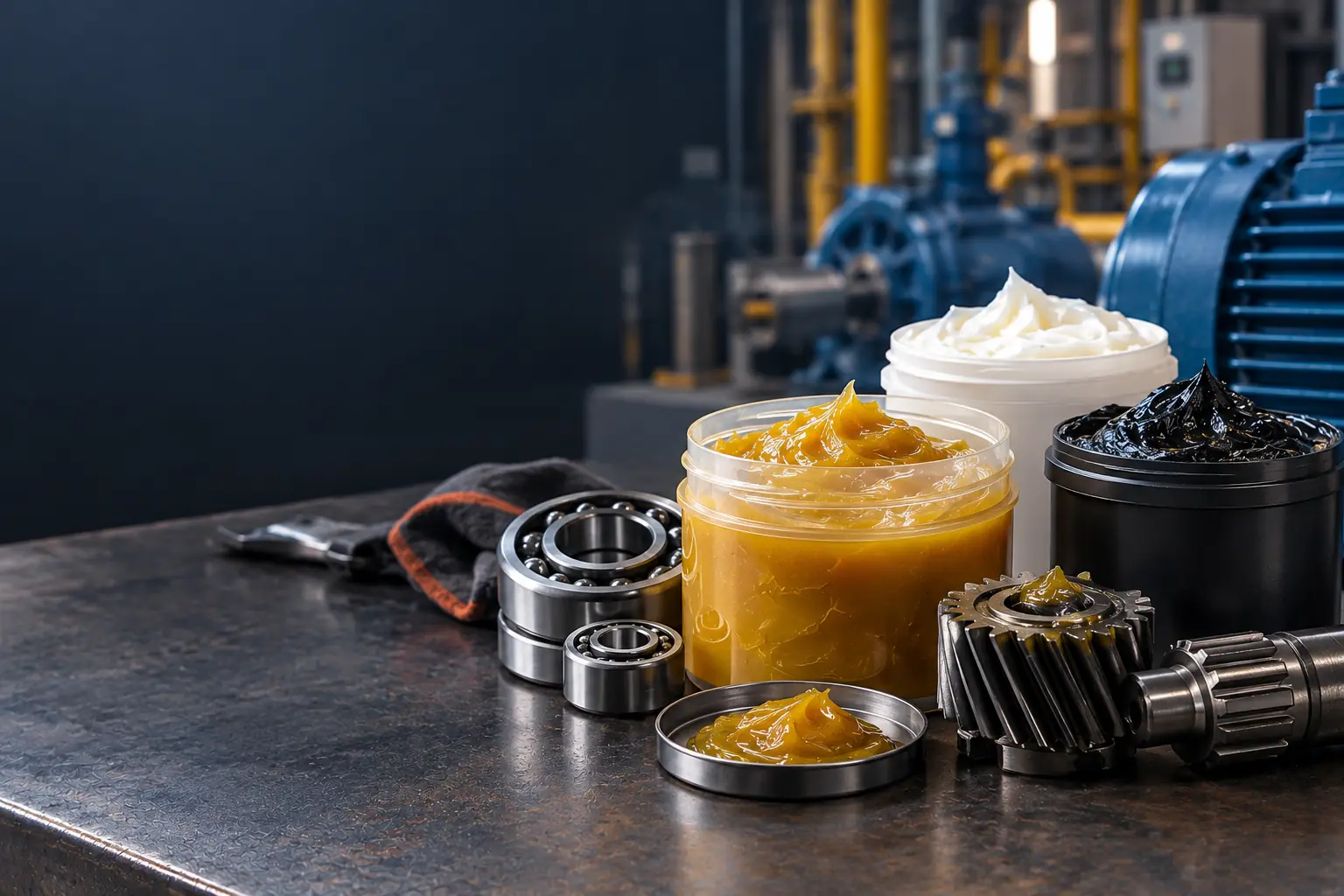
Types of Grease cannot be distinguished from one another simply based on their name or appearance. The main differences lie in the type of thickener, base oil, and additives used in their formulation. These components determine how a grease performs under heat, pressure, water, and other conditions.
Choosing the right grease is not limited to the type of equipment and requires consideration of factors such as the minimum operating requirements. Operating temperature, exposure to water or chemicals, and even the method of grease application can affect the final selection. In the following sections, we will explore the different types of grease and their various applications.
What Is Grease and What Is It Used For?
Grease is a semi-solid lubricant made by combining base oil, a thickening agent, and a range of additives. Greases are commonly used for components such as bearings, bushings, gears, and mechanical joints.
In addition to reducing friction and wear, these lubricants can protect components against moisture, dust, and corrosion. The type of grease should be selected according to the temperature and speed of the components to prevent damage to the components and equipment.
Introduction to Types of Grease and Their Applications
Choosing the right grease has a direct impact on component life and lubrication intervals. Therefore, understanding the common types of grease and their differences is very important. In the following sections, we will examine several examples of types of grease and their applications.
High-Temperature Grease
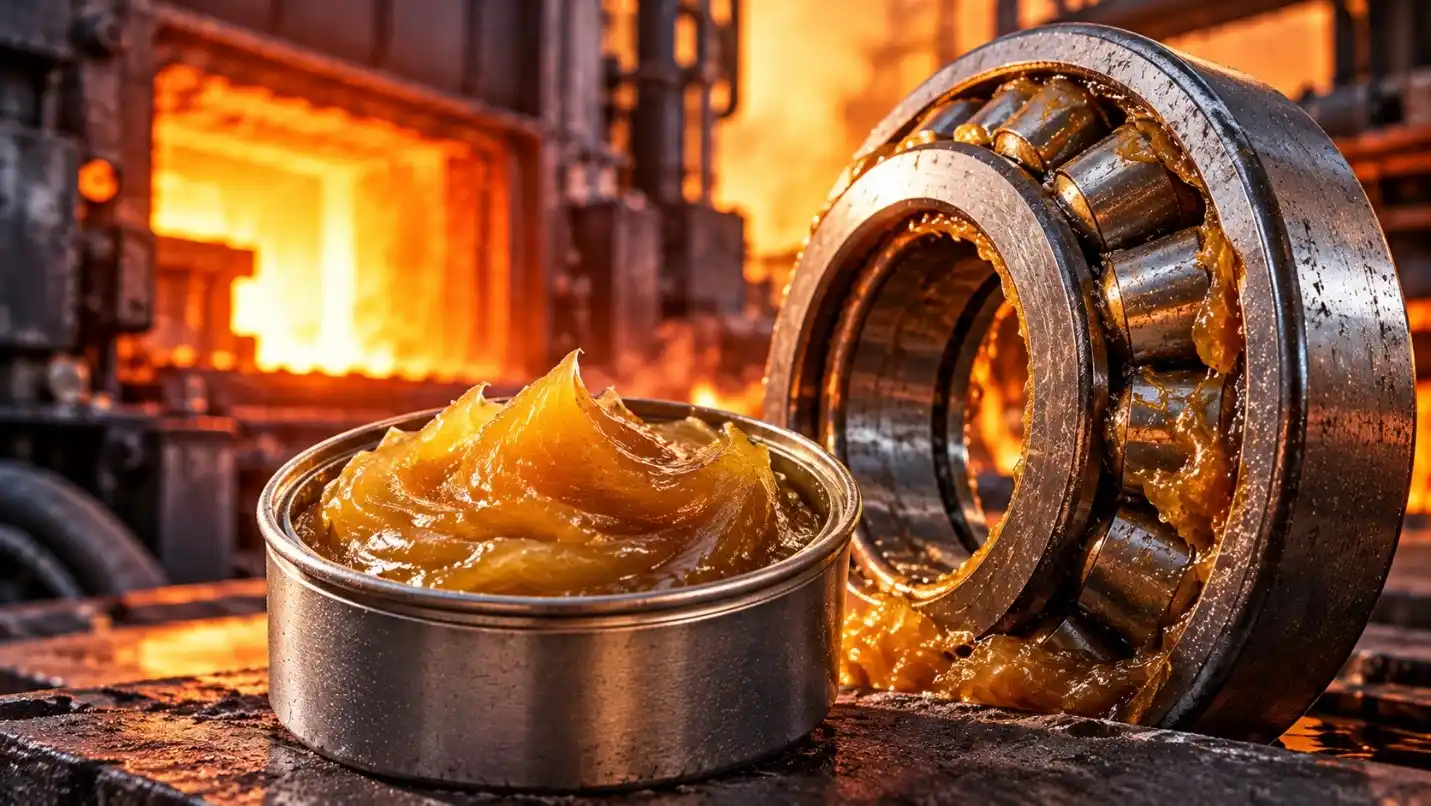
High-temperature grease is designed to lubricate components that operate at very high temperatures, where conventional greases may lose their properties. By maintaining its performance under high heat, this grease helps reduce wear and protect components. Applications of high-temperature grease include:
- High-temperature bearings and roller bearings
- Furnaces and heating equipment
- Steel and foundry industries
- Production lines and industrial machinery
- Motors and electrical equipment
Industrial Grease
Industrial grease is used to lubricate various machinery and components that operate under continuous working conditions, heavy loads, or environmental contamination. The formulation of these greases varies depending on the type of equipment and operating conditions and can help reduce maintenance costs. Applications of industrial grease include:
- Gears
- Bearings and roller bearings
- Production line machinery
- Steel and mining industry equipment
- Construction and heavy-duty machinery
Grease Pump
A grease pump is a device used to inject and transfer grease to the lubrication points of equipment, ensuring that grease reaches the required location at the appropriate pressure. These tools are available in different models, and their selection depends on the required volume, number of lubrication points, and operating conditions. Applications of grease pumps include:
- Lubricating bearings and roller bearings
- Injecting grease into bushings and fittings
- Servicing industrial machinery
- Maintaining construction and mining equipment
- Lubricating agricultural machinery
Types of High-Temperature Grease
High-temperature greases are produced for components exposed to high temperatures where conventional greases cannot maintain their performance. The main differences between these greases are related to their base oil, thickener, and additives, which determine the temperature range and applications of each type. Common types of high-temperature grease include:
- Lithium complex high-temperature grease
- Calcium sulfonate complex high-temperature grease
- Aluminum complex high-temperature grease
- Polyurea high-temperature grease
- Bentonite high-temperature grease
Types of Industrial Grease
Types of industrial grease are produced in different formulations based on their thickener, composition, and operating conditions, with each type designed for specific temperatures, pressures, and speeds. Choosing the right type of industrial grease can help reduce component wear, extend equipment life, and improve the performance of mechanical systems. The most common industrial greases include:
- Lithium grease
- Lithium complex grease
- Calcium grease
- Calcium complex grease
- Aluminum complex grease
- Polyurea grease
- Bentonite grease
Types of Grease by Color
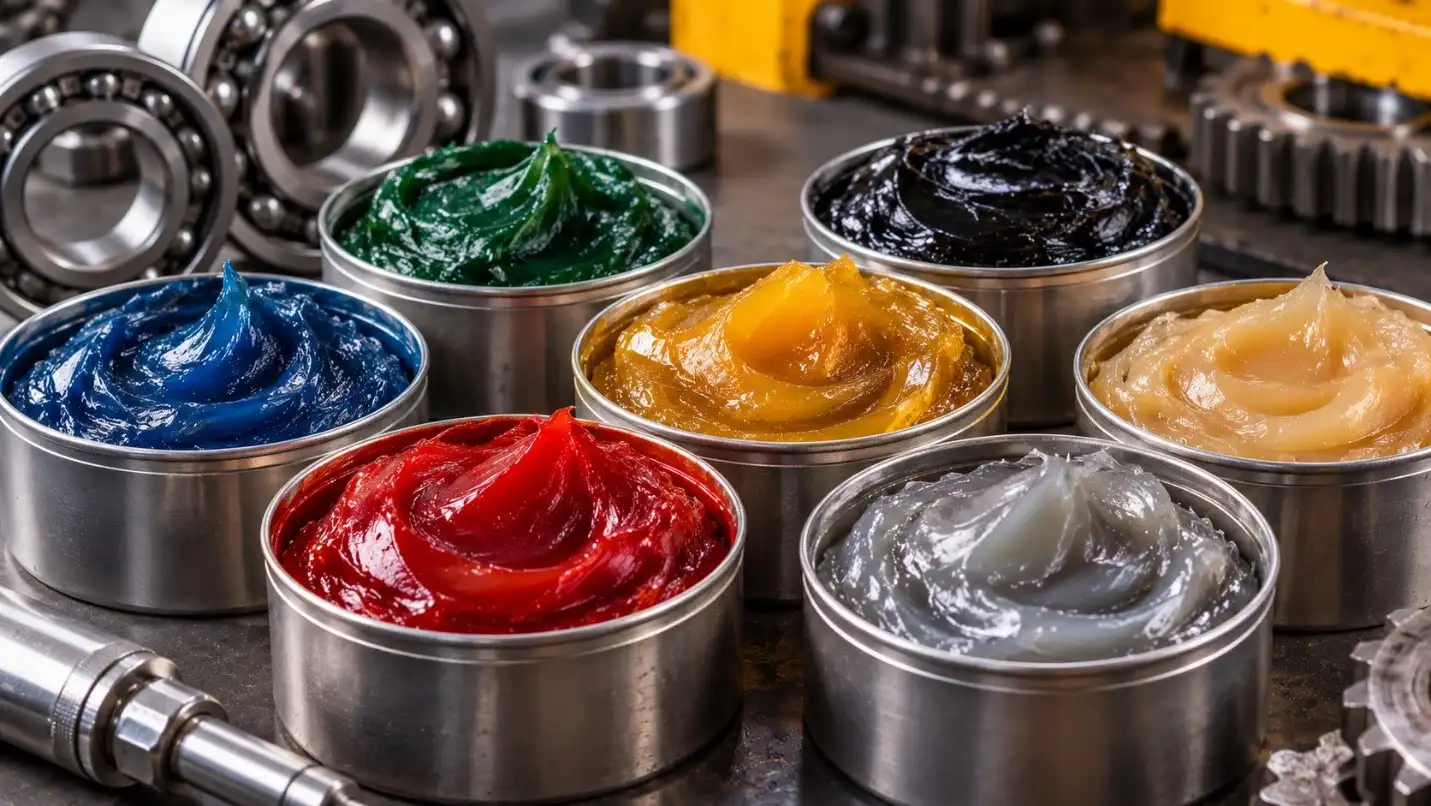
The color of grease can help identify a product and distinguish between different types, but it is not an accurate indicator of grease quality or performance. Different colors are usually caused by the type of base oil or pigments used in the formulation. Below, we introduce the types of grease by color:
Yellow Grease
Yellow grease is used in some industrial equipment, machinery, and general lubrication applications. Depending on its formulation, it can provide suitable resistance to friction and wear. The yellow color is related to the grease composition and manufacturing process and, by itself, is not an indicator of its application or quality.
Red Grease
Red grease is used in some industrial and automotive applications to lubricate components and reduce wear. Depending on its formulation, it can perform effectively under different temperatures, pressures, and working loads and help extend component life.
Black Grease
Black grease is generally used for components subjected to high pressure and heavy loads and is considered suitable for some industrial equipment, heavy machinery, and moving components.
How to Choose the Right Grease
Choosing the right grease should not be based solely on the type of equipment; the actual operating conditions are also very important. Operating temperature, pressure and load, and exposure to water and moisture are among the most important factors when selecting grease. Before making a selection, it is best to review the technical specifications provided by the manufacturer and choose the final product according to the equipment’s operating conditions. The most important factors to consider when selecting this lubricant include:
- Operating temperature
- Pressure and load
- Component speed
- Presence of water and moisture
- Component type
- Thickener type
- Compatibility with the previous grease
Understanding the types of grease and their applications helps ensure that the right lubricant is selected for each piece of equipment based on its operating conditions, helping prevent premature component wear. From high-temperature and industrial greases to greases designed for specific machinery, each product is formulated for specific conditions. Choosing the right product from the different types of grease can also make the greasing process simpler and more precise, helping minimize additional repair and maintenance costs for components and equipment.