

Die coat oil is a type of lubricant and release agent used in the high-pressure die casting process to coat the surface of the mold. It creates a thin layer between the mold and the metal, preventing molten metal from sticking to the mold surface and allowing the part to be removed more easily after forming.
The main application of this oil is in die casting molds and the production of metal components. Proper use can help maintain the surface quality of the part and reduce mold wear. The type and amount of die coat should also be selected according to the metal type, mold temperature, and casting conditions so that, in addition to providing proper release, it does not negatively affect the final quality of the part.
What Are the Properties of Die Coat Oil?
Industrial die coat oil should have properties that allow it to perform effectively in the high-pressure die casting process while facilitating easy part release and protecting the mold surface against heat, friction, and wear. The most important properties of this oil include:
Suitable Release Properties
One of the most important properties of this oil is preventing metal from sticking to the mold surface. This allows the part to be removed more easily after the casting process and reduces the risk of damage to the part or mold surface.
Thermal Stability
During operation, die coat oil comes into contact with the mold and molten metal at very high temperatures. Adequate thermal stability allows it to maintain its performance under such conditions and perform its primary function without unwanted changes.
Mold Temperature Control
This oil can help control the temperature of the mold surface and prevent excessive heat buildup in different areas. Proper temperature management is highly important in the die casting process and can contribute to more stable mold performance.
Controlled Evaporation and Decomposition
When in contact with a hot mold, part of the die coat oil is affected by heat. The formulation should be designed so that its evaporation and decomposition occur in a controlled manner, minimizing the formation of deposits and smoke as much as possible.
What Industries Use Die Coat Oil?
Industrial die coat oil is mainly used in industries where high-pressure die casting and the production of molded metal components are carried out. By creating a release layer on the mold, this material helps facilitate part removal and reduce metal adhesion. The main industries that use die coat oil include:
- Automotive industry: For producing components such as gearbox housings, engine parts, and brackets
- Aluminum component manufacturing: For die casting molds and the production of lightweight and precise aluminum components
- Zinc and non-ferrous alloy component manufacturing: For producing components made through the high-pressure die casting process
- Home appliance industry: For producing metal body parts and internal components of certain appliances
- Electrical and electronics industry: For producing housings, enclosures, and metal components of electrical equipment
What Equipment Uses Die Coat Oil?
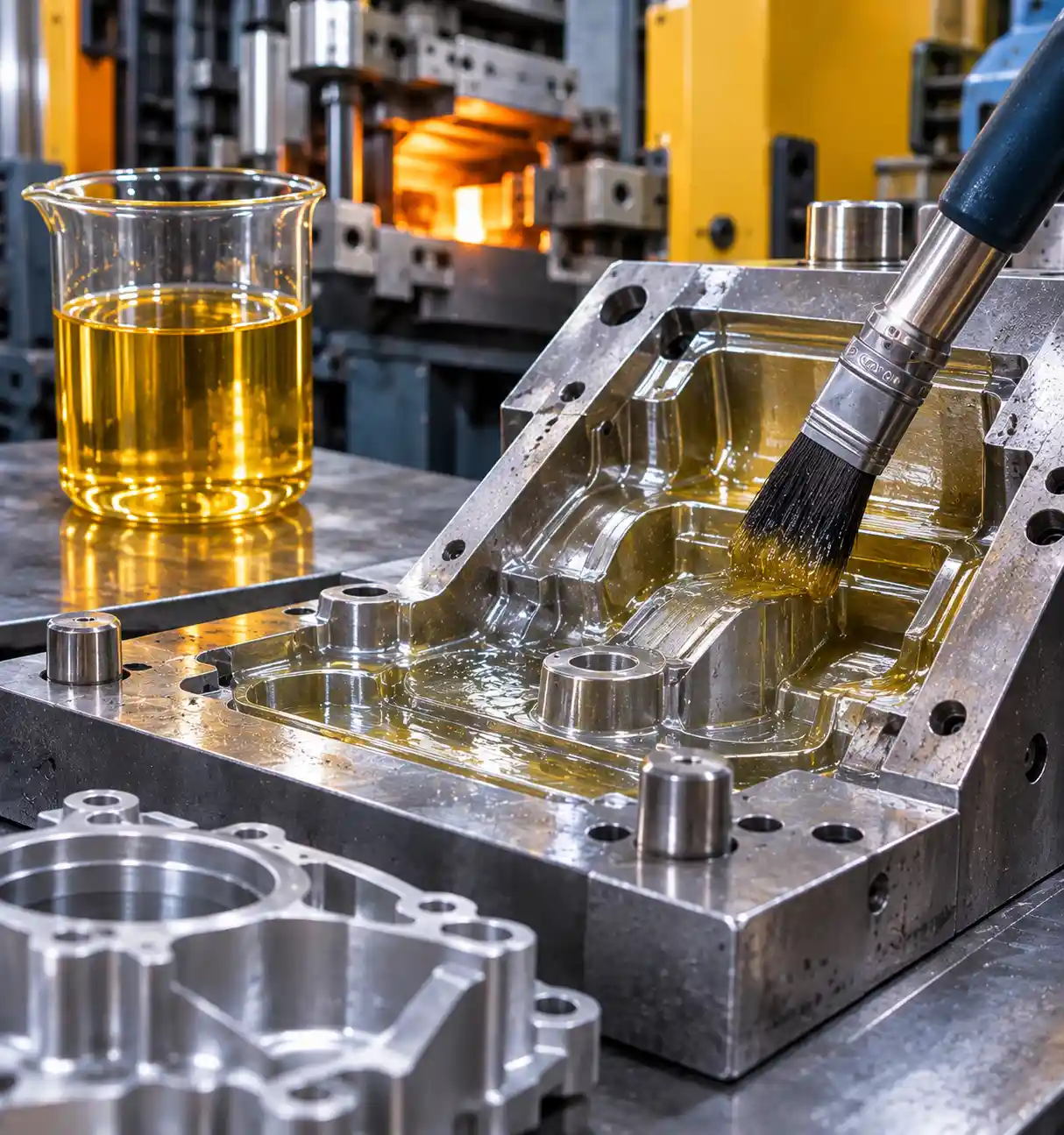
Die coat oil is mainly used in equipment where molds are continuously exposed to molten metal and high temperatures. This lubricant is typically part of the mold preparation and maintenance process in die casting machines. The main equipment associated with its use includes:
- Cold-chamber die casting machines
- Hot-chamber die casting machines
- Multi-cavity die casting molds
- Automatic mold spraying systems
- Mold lubrication robots
- Die casting machines for automotive components
Important Tips for Buying Die Coat Oil
When buying die coat oil, you should first consider the casting process conditions and mold type. The metal type, mold temperature, type of die casting machine, and die coat spraying method are important factors that can significantly affect product selection. It is also advisable to review the product's technical specifications to ensure that the selected die coat is compatible with the process in terms of release properties, thermal stability, and application method.
When buying die coat oil, also pay attention to the dilution ratio, application method, and the formation of deposits and smoke at very high temperatures. Selecting a product suited to the operating conditions can improve mold performance, provide more consistent part quality, and help reduce process-related problems.
When Should Die Coat Lubricant Be Replaced?
The replacement interval for die coat oil depends on factors such as the number of production cycles, mold temperature, frequency of use, and casting conditions, so a specific replacement interval cannot be determined for all machines. The lubricant should be replaced if it changes in color or texture, creates deposits on the mold, fails to provide a uniform coating, or reduces the quality of part release.
When buying die coat oil, it is also advisable to follow the manufacturer's recommendations regarding storage conditions and product service life. Proper storage, contamination prevention, and using a die coat suitable for the mold conditions can help maintain lubricant quality and stable performance throughout the process.
We learned what die coat oil is and how it is used to improve mold performance and facilitate easier part removal. The right product should be selected based on the metal type, mold temperature, and mold material to ensure optimal performance. When buying industrial die coat oil, paying attention to its quality and technical specifications is also highly important and can contribute to continuous production line operation.