

The best grease for wet environments is a grease that can fully maintain its structure and adhesion properties under direct contact with water or steam. Equipment exposed to moisture is constantly at risk of grease washout from components, rust, and loss of the protective layer. Lubricants based on calcium sulfonate and aluminum complex are the best options for these conditions.
A suitable grease should have good adhesion and mechanical stability in addition to water resistance. However, the type of component, level of water exposure, and operating temperature are also important. Using these greases helps prevent component wear even under harsh environmental conditions and minimizes maintenance and repair costs.
Features of suitable grease for wet environments
Grease suitable for humid environments must maintain its lubricating properties while withstanding conditions such as hot steam and constant moisture. In such environments, grease selection is not based solely on its consistency; factors such as equipment type, operating temperature, and load on the component are also important. The key features of these greases include:
Resistance to water washout
This is one of the most important properties of moisture-resistant grease. When exposed to water, the grease structure should not break down quickly or wash off the component surface, allowing the lubricant to remain on the surface longer and perform its function properly.
Good emulsion stability
In some conditions, water may mix with the grease. In such cases, water-resistant grease should have good stability against oil separation and sudden changes in its structure caused by the presence of water.
High adhesion and long-lasting performance
The best grease for wet environments should remain on the equipment surface and not be easily washed away by movement, water splashing, or wet operating conditions.
Protection against rust and corrosion
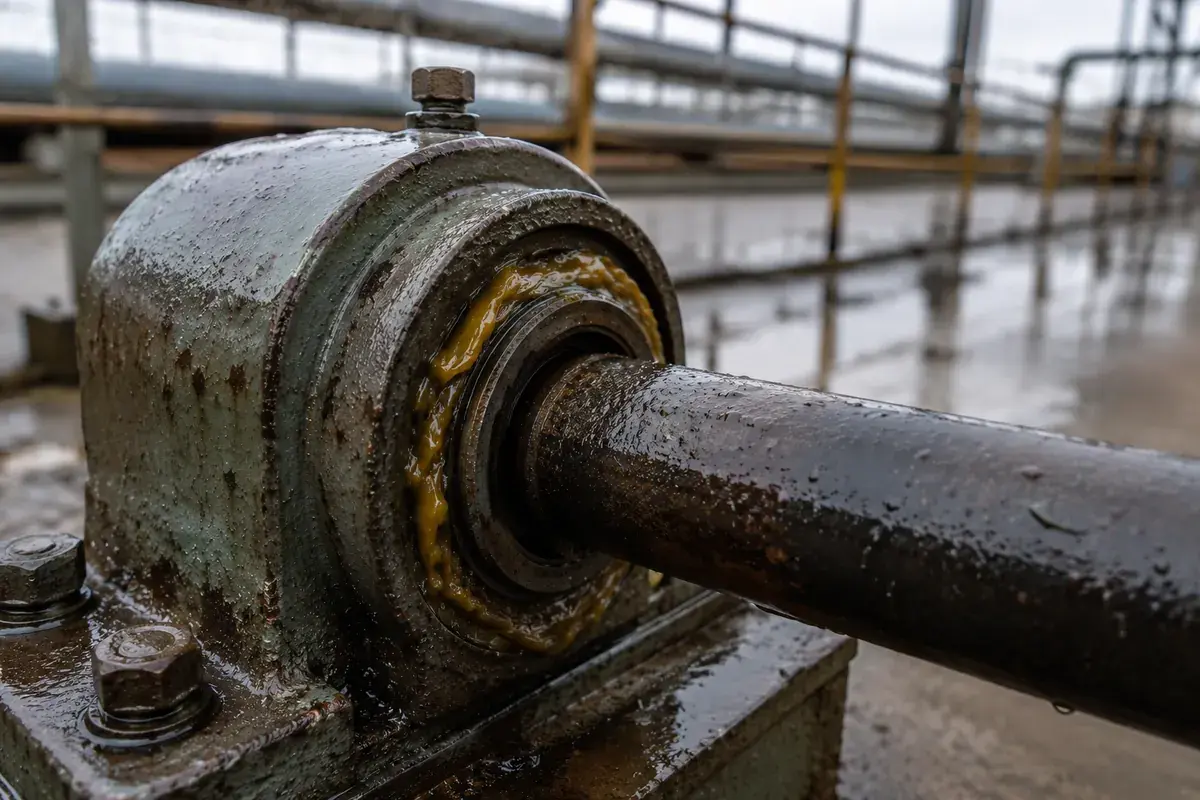
Continuous contact with water increases the risk of corrosion in metal components. Greases suitable for wet environments should protect the component surface from this damage by forming a protective layer and containing corrosion inhibitors.
Which greases are suitable for wet environments?
For environments where components are constantly exposed to water and moisture, greases with high resistance to water and washout should be used. The choice of grease depends on the level of water exposure, pressure, and equipment type. Common water-resistant greases include:
- Water-resistant calcium grease
- Calcium complex grease
- Aluminum complex grease
- Lithium complex grease
- Calcium sulfonate complex grease
- Water-resistant synthetic grease
What equipment are water-resistant greases used in?
Water-resistant grease is used in equipment where components are constantly exposed to water. With its good durability in the presence of water, this lubricant is a practical choice for components such as bearings, bushings, and moving joints. Some of the main equipment that uses moisture-resistant grease includes:
- Water pumps and fluid transfer equipment
- Agricultural machinery and outdoor equipment
- Marine equipment and dock facilities
- Bearings and bearing housings in production lines
- Washing machines and wet industrial equipment
- Construction equipment operating in wet environments
How to choose the right grease for humid environments?
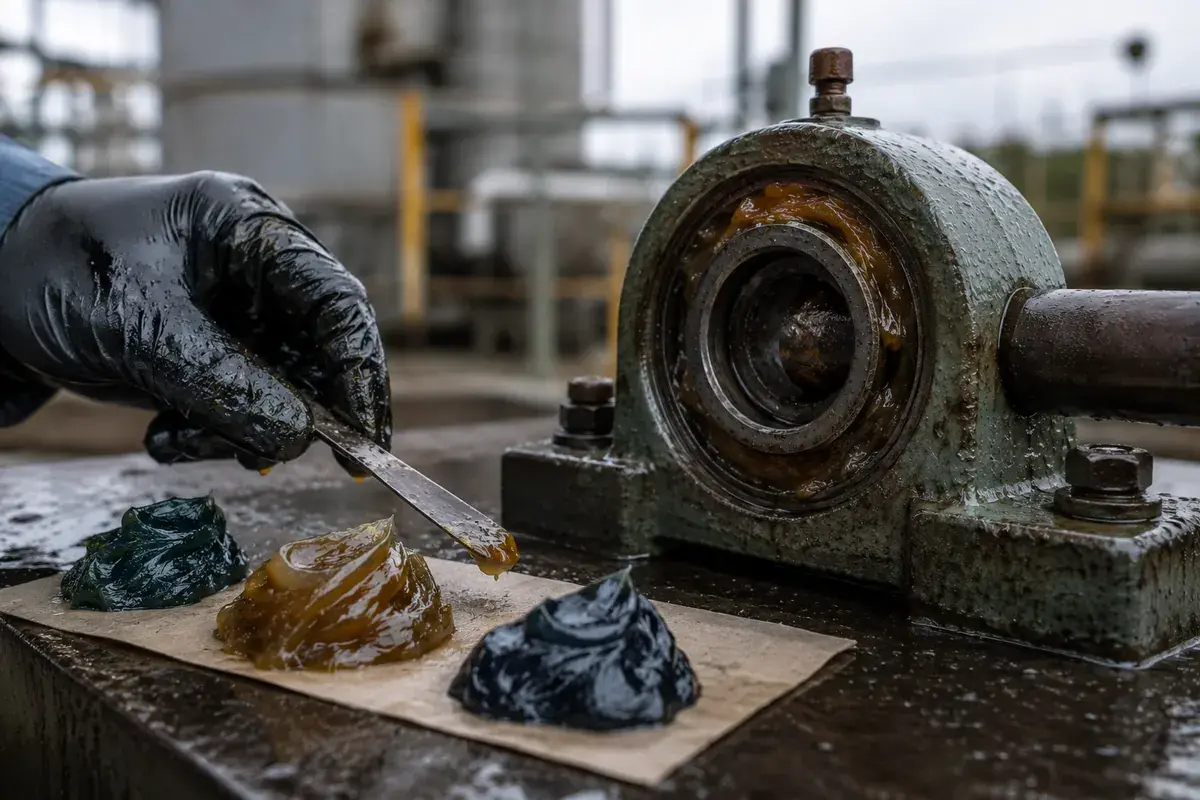
In wet environments, choosing the right lubricant is very important, as water penetration can cause loss of lubrication and equipment failure. Water-resistant grease should be able to maintain its structure against moisture and water and create a stable layer on the surface of components. In components such as bearings, ball bearings, and outdoor machinery that are exposed to constant moisture, this property is particularly important.
When choosing the best grease for wet environments, pay attention to factors such as mechanical stability, corrosion resistance, and operating temperature. The type of thickener and the structure of the grease can also affect its performance in wet environments. In fact, moisture-resistant grease should be able to maintain its structure even in the presence of water and continue lubricating the component for the desired period.
When to replace water-resistant grease
The replacement interval for grease suitable for wet environments depends on the operating conditions of the equipment. Normally, intervals of 3 to 6 months can be considered in wet environments; however, if components are constantly exposed to steam or water, this interval may be reduced to 2 to 3 months. Under very harsh operating conditions, such as continuous water washing, lubrication may need to be performed monthly or weekly.
Ultimately, the best grease for wet environments is a grease that has high resistance to water and moisture under actual operating conditions and maintains its stability against washout, corrosion, and temperature changes. Therefore, before choosing a grease, do not focus only on its name or type; also consider the environmental conditions, level of water exposure, temperature, and operating speed of the equipment. Choosing a water-resistant grease properly can reduce equipment failures and, as a result, improve efficiency.