
Bentonite Grease Manufacturing with Custom Brand & Packaging
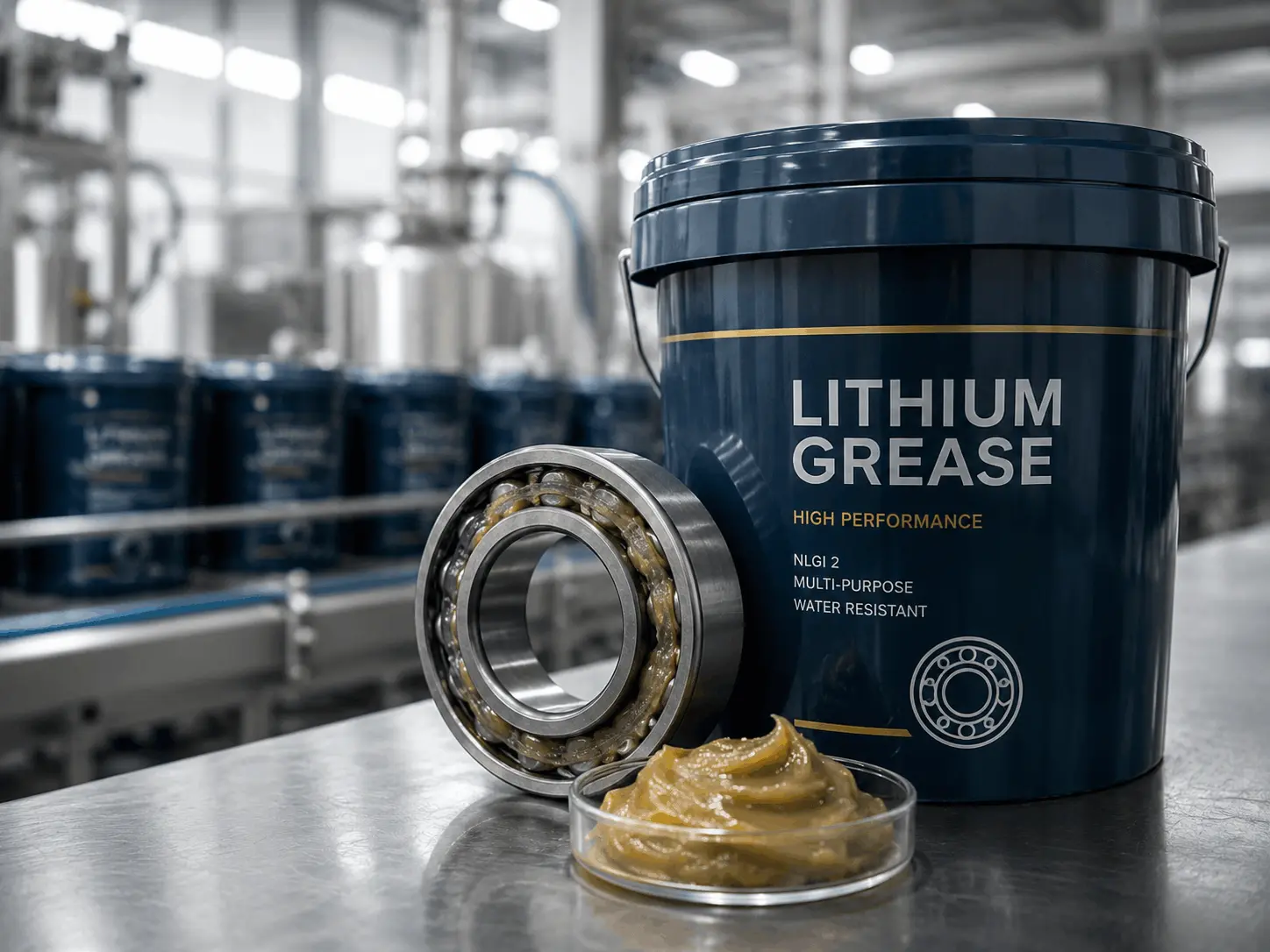
Manufacturing Bentonite grease at Petroravankar Factory is carried out based on the type of application, operating temperature conditions, and the technical specifications required by the customer. Petro Ravankar provides customized bentonite grease formulations and can produce the final product in the required quantities with the customer's private brand and suitable packaging based on the target market or application.
Bentonite grease uses a bentonite-based thickener and, unlike soap-based greases, its performance under heat does not depend on the melting process of soap. Therefore, it can be suitable for certain high-temperature applications. However, selecting this type of grease should be based on the actual equipment conditions, operating temperature, and lubrication requirements to ensure the appropriate formulation is chosen.
Bentonite grease production consultation and price inquiry form
Frequently asked questions
What is Bentonite Grease?
Bentonite grease is one of the few lubricants that has a completely different behavior compared to soap-based greases due to the use of bentonite clay as a thickening agent. This unique structure allows bentonite grease to resist melting or changing its state at very high temperatures and maintain its lubrication properties effectively.
Due to its high thermal resistance, bentonite grease is widely used in equipment operating under high-temperature conditions. This lubricant is used in applications such as furnace bearings, hot air transfer fans, and thermal conveyors in industries including steel, cement, glass, and ceramics. It plays an important role in extending the service life of components and improving their performance.
If you are wondering what bentonite grease is, it is an industrial lubricant whose structure is based on a bentonite thickener, a type of mineral clay with the ability to absorb and retain oil. One of the most important differences of this grease is its ability to maintain its structure at high temperatures, as this product does not have a true melting point.
This important feature, along with very high mechanical stability and resistance to oxidation, has allowed bentonite grease to gain a special position in demanding operating conditions such as industrial furnaces, steel production lines, glass industries, and other heavy-duty applications.
Another advantage of bentonite grease is its ability to retain the base oil within its structure. Bentonite particles create a stable network that traps the oil inside the overall grease structure and prevents it from separating. Under these conditions, the oil is released only when moving components and equipment require lubrication to reduce friction and form a protective lubricating film.
Applications of Bentonite Grease
Bentonite grease is used in equipment where conventional lubricants face limitations due to its non-soap-based structure. Properties such as high-temperature resistance, long-term stability, and good adhesion have made bentonite grease a popular lubricant. Some of the most important applications of bentonite grease are discussed below.
1. Bearing Lubrication
One of the most important applications of bentonite grease is lubricating bearings that operate under high temperatures and harsh working conditions. In such environments, other greases may soften and leave the lubrication point. However, bentonite grease maintains a protective layer between metal surfaces for a longer period due to its unique structure.
2. Steel Industry and Furnace Equipment
In steel industries and equipment such as bearings, rollers, and casting machinery that are exposed to intense and continuous heat, lubricants with high resistance to harsh conditions are required. Due to its excellent thermal stability and oxidation resistance, bentonite grease delivers outstanding performance in such environments.
3. Cement and Glass Industries
In industrial environments such as cement and glass factories, equipment requires lubrication that can create a continuous protective layer by maintaining adhesion and resisting structural changes due to factors such as dust, high mechanical loads, and continuous operation.
4. Paper and Pulp Industries
Paper production machinery typically operates continuously for long hours, and some equipment may be exposed to prolonged moisture conditions. Therefore, bentonite grease applications in this industry include lubricating components that require high thermal stability and long-term resistance to water and moisture.